Watercraft
Sea-Doo vs. Yamaha WaveRunner: Which Personal Watercraft Is Right for You? (2026 Buyer’s Guide)
Apr
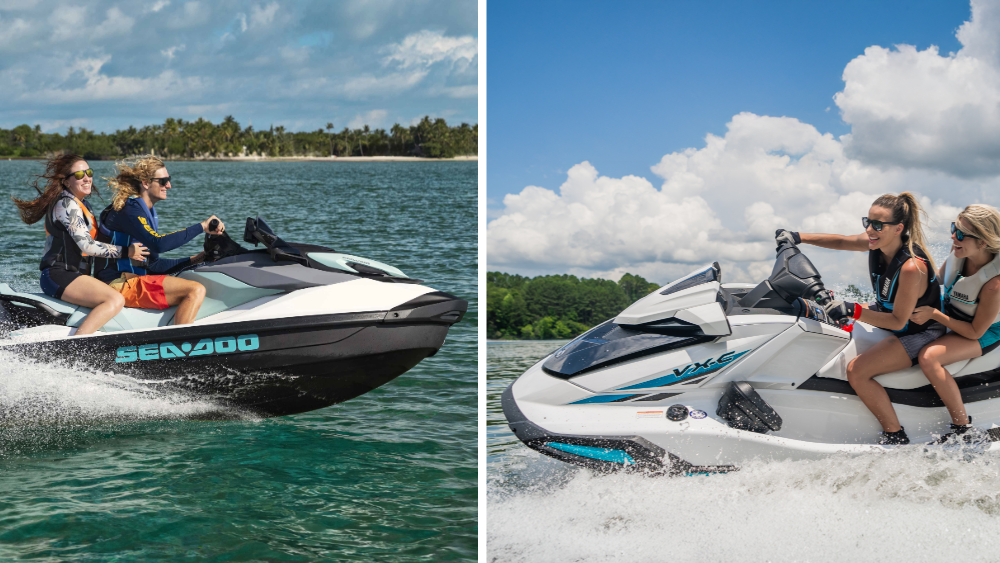
If you’ve started shopping for a personal watercraft and found yourself bouncing between Sea-Doo and Yamaha, you’re in good company. These are the two biggest names in the PWC world, and in 2026 both brands are offering more models, more technology, and more specialization than ever before.
The problem is that “more options” can make the decision harder, not easier. A first-time buyer browsing the full lineup of either brand can quickly feel overwhelmed. So this guide cuts through it. We’ll break down every major model category side by side, explain what each brand does well, and help you figure out which watercraft actually fits the way you plan to ride.
Richmond Honda House carries both Sea-Doo and Yamaha WaveRunners here in Richmond, Virginia. Everything in this guide is in stock or available to order. If something catches your eye, come by the showroom or give us a call.
The Big Picture: Two Different Philosophies
Before diving into specific models, it helps to understand what each brand stands for at a foundational level. That philosophy shapes every buying decision downstream.

Sea-Doo’s strength is purpose-built specialization. If you have a specific mission — sport fishing, tow sports, adventure touring, freestyle tricks — Sea-Doo has engineered a machine specifically for that purpose. The trade-off is that choosing wrong for your use case can leave you with a capable but mismatched machine.

Yamaha’s philosophy is what the brand calls the “Yamaha Advantage”: reliability-first engineering built around naturally aspirated engines, intuitive controls, and long-term ownership value. Yamaha is notably the only PWC brand to receive the NMMA Customer Satisfaction Index Award for more than 20 consecutive years — a stat that resonates with buyers who plan to own their watercraft for a long time. If you want a machine that runs strong, holds its value, and stays out of the shop, Yamaha is worth a very close look.
Neither philosophy is wrong. They just serve different buyers.
Category-by-Category Breakdown
Rec-Lite: Best Entry-Level PWCs
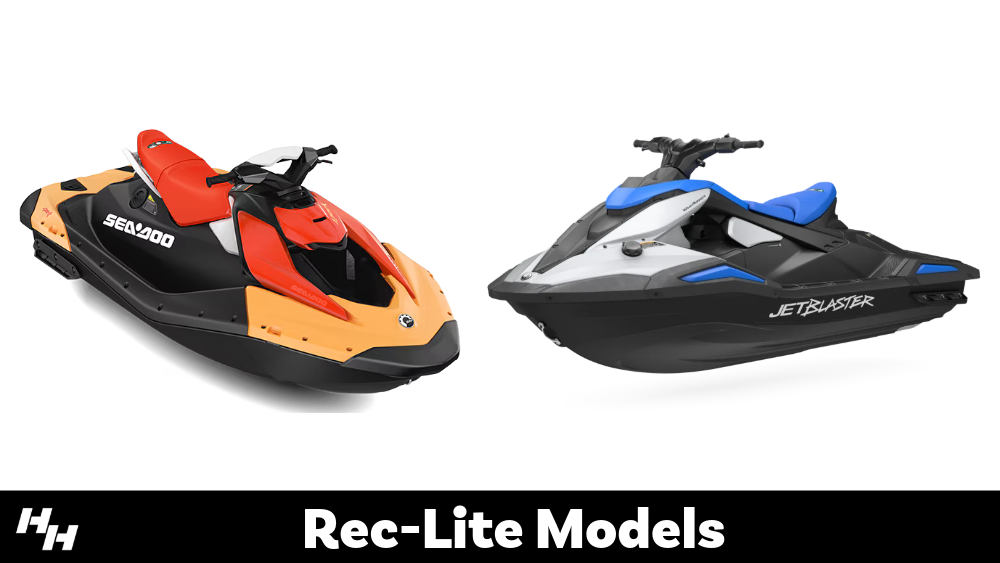
Rec-Lite models are for buyers who want to get on the water without a major financial commitment — lighter, smaller, easier to tow and store, and easier on the wallet.
| Model | Starting Price | Best For |
|---|---|---|
| Sea-Doo Spark (2-up) | $6,999 | Budget entry; casual riders |
| Sea-Doo Spark Trixx | $9,499 | Freestyle tricks; stand-up maneuvers |
| Yamaha JetBlaster Base | $8,499 | Performance-focused entry; punchy power |
| Yamaha JetBlaster LTD | $12,399 | Loaded Rec-Lite with accessories |
The Sea-Doo Spark is the most affordable way to get on a PWC, period. At $6,999 it’s genuinely hard to beat if budget is the primary driver. The Spark Trixx adds an adjustable trim system and step wedges for riders who want to learn tricks and freestyle moves.
The Yamaha JetBlaster punches harder right out of the box. Its ultra-lightweight hull paired with the TR-1 High Output engine gives it a power-to-weight ratio that surprises people expecting a budget ride. Worth noting: the base JetBlaster ($8,499) actually undercuts the Spark Trixx ($9,499) while delivering more performance-oriented engineering.
Shop All Rec-Lite at Richmond Honda House >
Recreation: The Best Family and All-Around PWCs
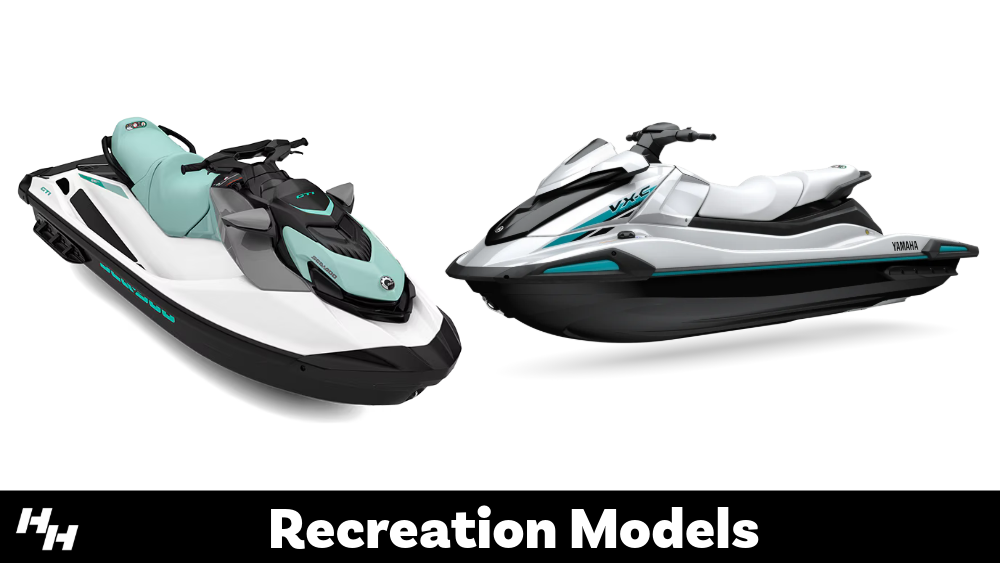
Recreation models are where most buyers land; stable enough for three passengers, powerful enough to tow a tube or skier, and priced in a range that makes sense for regular family use.
| Model | Starting Price | Best For |
|---|---|---|
| Sea-Doo GTI SE 130 | $13,299 | Family use; debris-heavy water |
| Sea-Doo GTI SE 170 | $13,899 | Family + tech package + debris system |
| Yamaha VX-C | $11,099 | Durable value; basic needs |
| Yamaha VX Cruiser HO | $14,899+ | Best all-rounder with power + audio |
The Sea-Doo GTI SE’s headline feature is the iDF — Intelligent Debris-Free Pump System. If you’re riding on the James River, Lake Anna, or anywhere with weeds, grass, or debris, this is a big deal. It lets you clear a clogged intake from the seat without getting in the water. It’s a quality-of-life feature that becomes a genuine operational advantage on Virginia waterways.
The Yamaha VX series counters with its 1.9L High Output naturally aspirated engine — and that “naturally aspirated” distinction matters more than it sounds. Without a turbocharger or supercharger in the system, there’s less complexity to maintain, and the engine tends to deliver better long-term reliability and stronger resale value. The full VX lineup from the base VX-C all the way to the VX Limited HO gives buyers a lot of room to spec up to exactly what they want.
Luxury and Touring: Long-Distance and Premium Riders
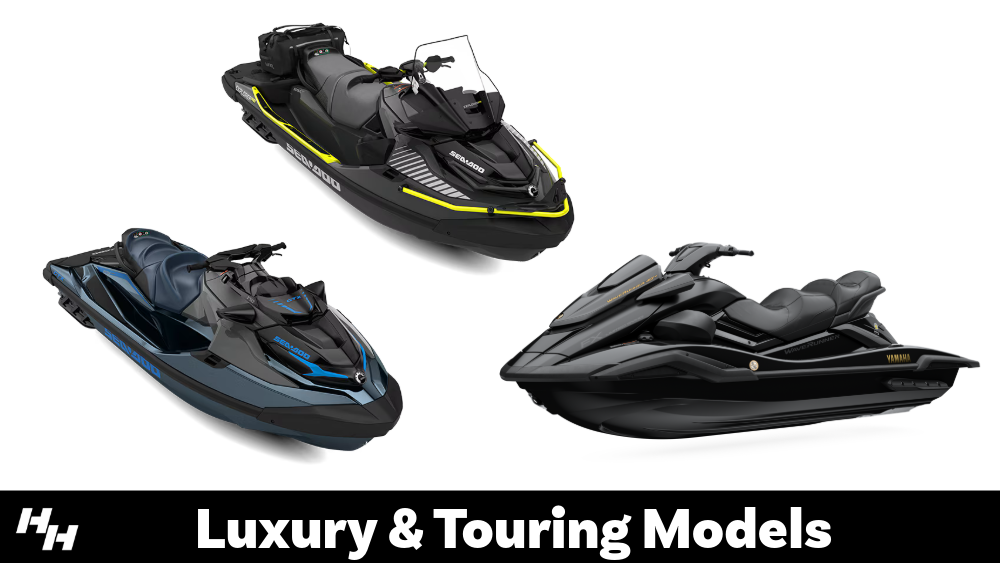
Luxury models are built for riders who spend hours on the water — larger fuel tanks, more storage, premium tech, and a higher level of comfort. This is also where the two brands diverge most sharply in terms of what “touring” means.
| Model | Starting Price | Best For |
|---|---|---|
| Sea-Doo GTX | $15,949 | Premium all-day cruising |
| Sea-Doo GTX Limited 325 | $22,549 | Top-spec luxury; 325 HP |
| Sea-Doo Explorer Pro | $20,149 | Adventure touring; remote exploration |
| Yamaha FX HO | $17,199 | Value luxury entry; big engine |
| Yamaha FX Limited SVHO | $22,199+ | Performance luxury; supercharged speed |
Sea-Doo splits this category in two. The GTX family is their traditional luxury flagship — the GTX Limited 325 features a 325 HP supercharged engine, making it the most powerful production PWC in the lineup. The Explorer Pro is something different entirely: it’s built for serious multi-day adventure touring, with front bumpers, a windshield, and modular storage designed for riders who want to explore beyond the marina.
Yamaha’s FX series leans into what they call “Technology-Driven Luxury.” The Connext infotainment system, premium factory audio, and the supercharged SVHO engine in the top trims make the FX Limited SVHO ($22,199) a strong competitor for buyers who want a fast, tech-forward cruiser. For touring buyers who prioritize speed and digital refinement over expedition capability, the FX series is the better fit.
The honest takeaway here: if your touring means exploring remote waterways and camping, choose the Explorer Pro. If your touring means fast, comfortable weekend riding with great tech, choose the FX.
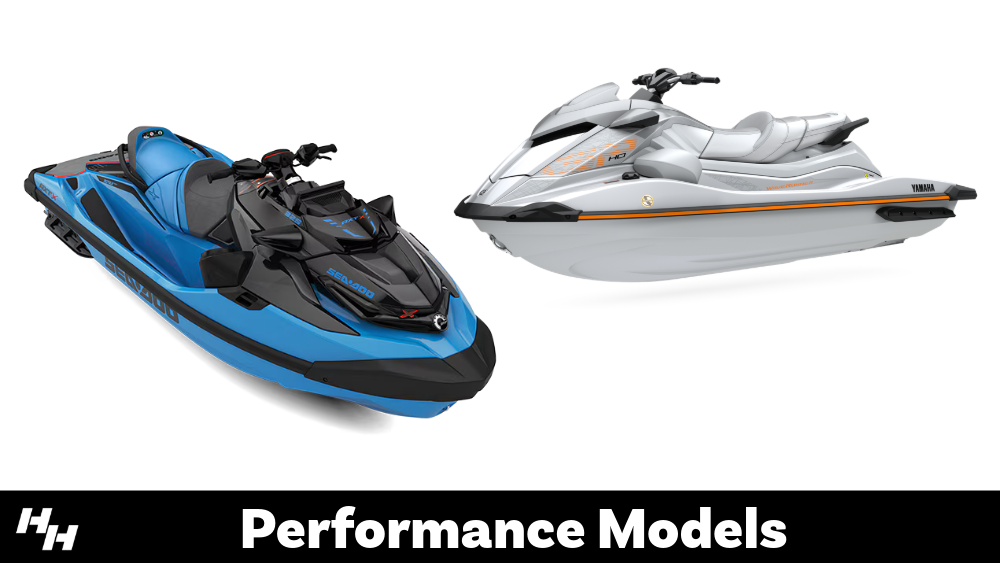
Performance: For Riders Who Want It Fast
Performance models are where the spec sheets get serious. These machines are built for aggressive acceleration, sharp handling, and in some cases, competition-level riding.
| Model | Starting Price | Best For |
|---|---|---|
| Sea-Doo GTR 230 | $14,899 | Best entry into supercharged riding |
| Sea-Doo RXT-X 325 | $21,899 | Elite straight-line speed |
| Sea-Doo RXP-X 325 | $21,999 | Elite race handling + speed |
| Yamaha GP HO | $15,699 | Reliability + performance balance |
| Yamaha GP SVHO | $17,999 | Championship-grade agility |
Sea-Doo leads the spec sheet with a 325 HP supercharged Rotax engine in the RXP-X and RXT-X — and those numbers are real. If maximum horsepower is the objective, Sea-Doo wins that conversation. The GTR 230 ($14,899) is also worth calling out: it’s the most accessible entry point to a supercharged PWC available, and it significantly undercuts what you’d pay for a comparable Yamaha performance model.
Yamaha’s competitive edge in this category isn’t on the spec sheet — it’s on the water. The GP series is engineered around weight reduction, and a lighter machine often translates to faster, more agile real-world performance than a heavier high-HP competitor. The 1.8L SVHO engine in the GP SVHO is the same world-championship-winning powerplant Yamaha has campaigned at the top level of PWC racing.
Specialty Categories: Fishing, Tow Sports, and Stand-Up
This is where Sea-Doo’s purpose-built philosophy really shines — and where Yamaha brings a genuinely unique concept to the market.
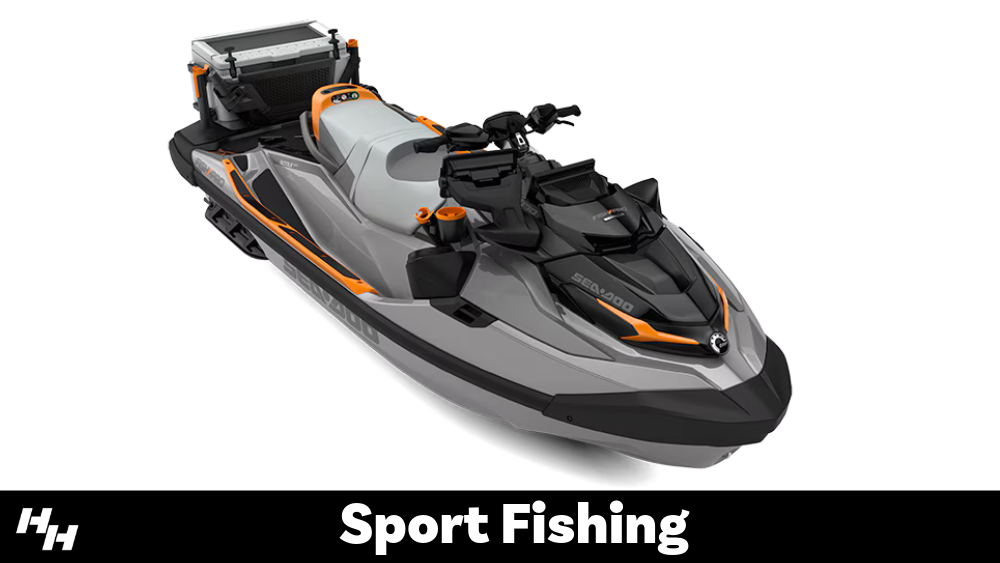
Sport Fishing
Sea-Doo owns this category in 2026. The FishPro lineup — Scout, Sport, and Trophy — comes factory-equipped with Garmin fish finders, rod holders, and coolers. There is no aftermarket rigging required; these machines are ready to fish the moment they hit the water. Yamaha does not currently offer a dedicated fishing model. If PWC fishing is your primary use case, Sea-Doo is the clear answer.
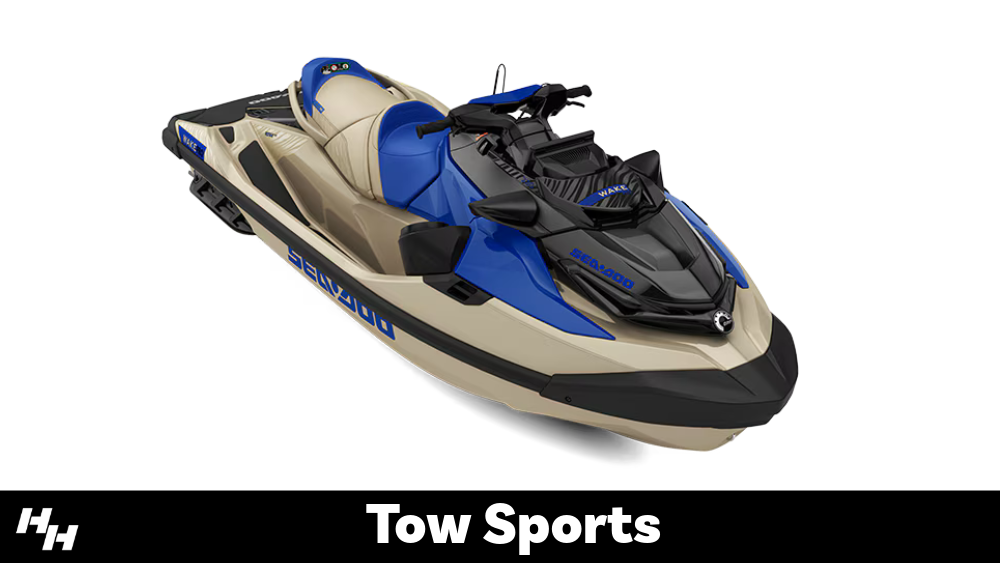
Tow Sports
If skiing or wakeboarding is the plan, the Sea-Doo Wake and Wake Pro were built specifically for it. A retractable ski pylon and “Ski Mode” that automates acceleration profiles make this a purpose-designed tow machine — not a recreation model with a pylon bolted on.
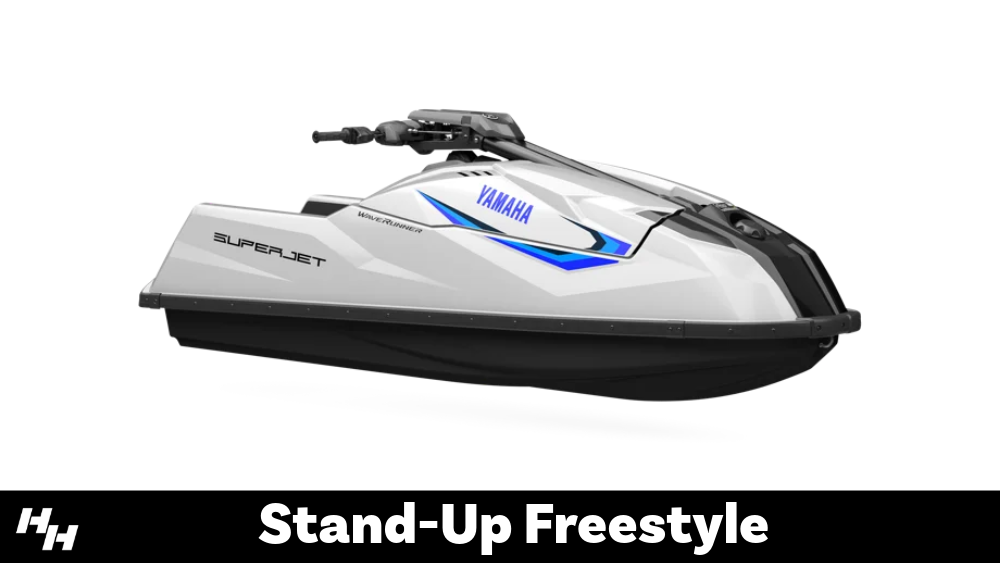
Stand-Up Freestyle
The Yamaha SuperJet ($11,499) remains the gold standard for traditional stand-up riding. If you grew up on stand-ups and want the real thing, this is the machine.
Quick Decision Guide: Which Brand Is Right for You?
| Choose Sea-Doo if: |
|---|
|
| Choose Yamaha if: |
|---|
|
See Both Brands In Person at Richmond Honda House
Richmond Honda House has carried Sea-Doo and Yamaha WaveRunners for decades, and our team knows both lineups inside and out. Whether you’re buying your first PWC or upgrading to something more capable, we can help you find the right machine for the way you actually ride — not just the one that looks best on a spec sheet.
Stop by our showroom at 7906 West Broad Street in Richmond, Virginia, or give us a call at (804) 270-0123. You can also browse our full in-stock lineup of Sea-Doo and Yamaha personal watercraft online:
Browse All Sea-Doo Models at Richmond Honda House
Browse All Yamaha WaveRunners at Richmond Honda House
Questions before you come in? Our team is on the floor Monday through Saturday. Call (804) 270-0123 and ask for our powersports team — they ride this stuff on weekends.